
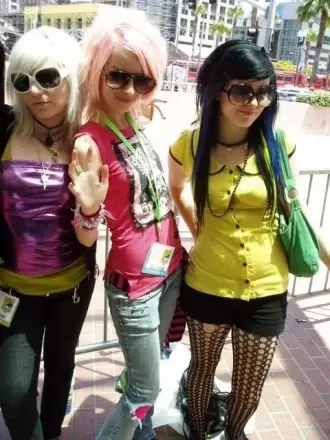
Blog TaskThe subculture I chose to look at was Scene, a youth subculture that came about in the early 2000's from the emo subculture that came before it. Scene differed from the emo subculture as those part of it were known for using a lot of bright colours in their fashion and hair, unlike emos who tended to go for dark colours and mainly black, however both are known for their enjoyment of alternative and rock music. The young people participating in this subculture were usually referred to as scene kids, and they would express themselves mainly through their fashion and alternative, rock music. Scene kids are known for their big, colourful, teased hair, with many choppy layers and side bangs. Piercings, skinny jeans, band t-shirts, and big eyeliner were also common fashion choice for the youth who were part of this subculture.
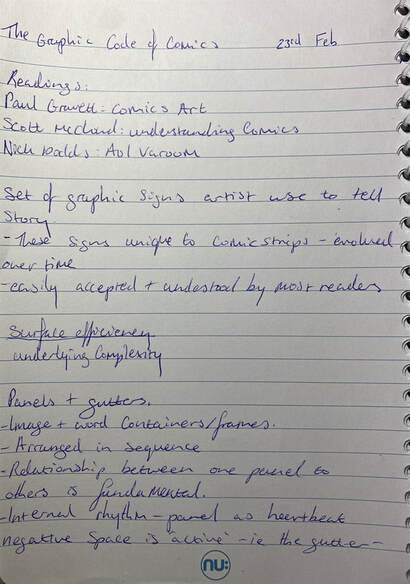
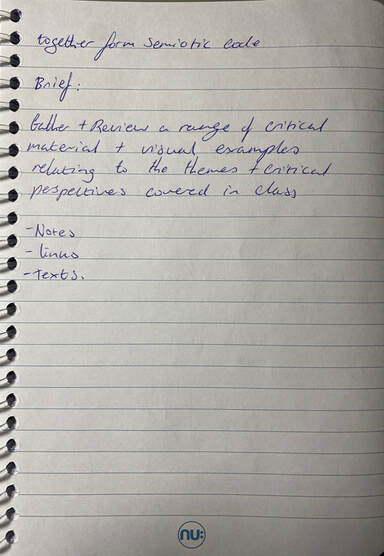
ReadingsPaul Gravett Comic Art pp 22 - 33 Nick Dodds: VaroomLab Comic Strips pp 42 - 50 Lecture Notes
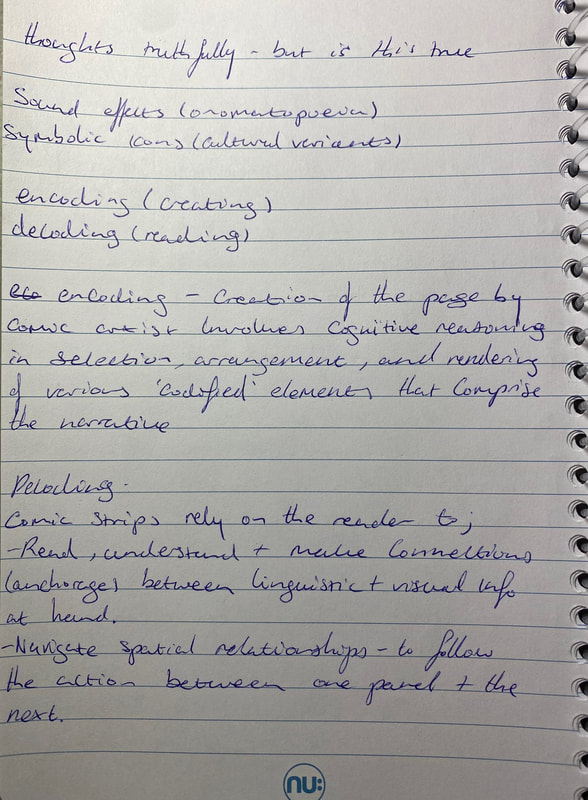
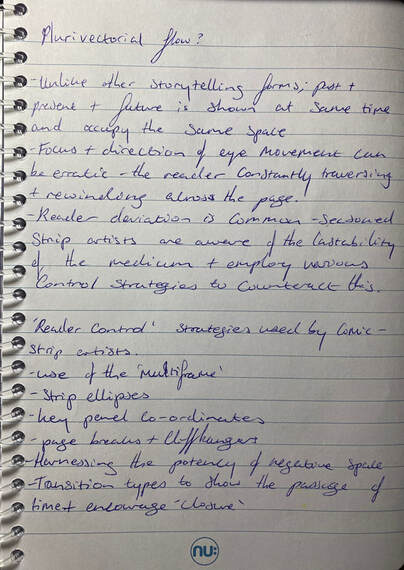
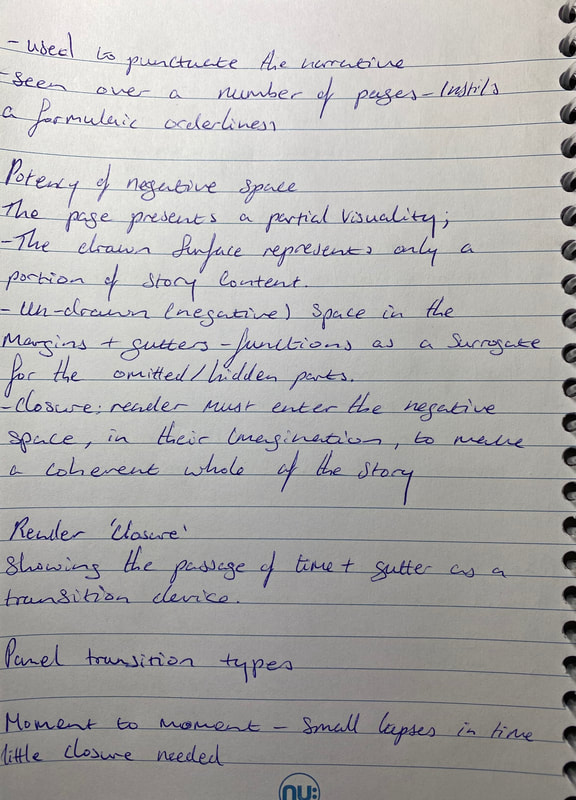
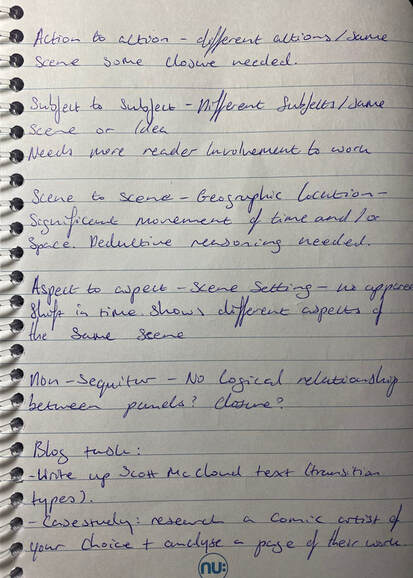
Scott Mc Cloud - Panel transition typesMoment to moment - Small lapses in time, little closure needed. Action to action - Different actions / same scene, some closure needed. Subject to subject - Different subjects / same scene or idea, needs more reader involvement to work. Scene to scene - Geographic location - Significant movement of time and / or space. Deductive reasoning is needed. Aspect o aspect - Scene setting - no apparent shift in time. Shows different aspects of the same scene. Non-sequitur - No logical relationship between panels. Blog Task - Junji ItoReadingsJonathan Bignell Deconstructing Advertising: Media Semiotics pp 28 - 39 Roland Barthes: Rhetoric of the Image from IMAGE.MUSIC.TEXT pp 152 - 163 Lecture Notes
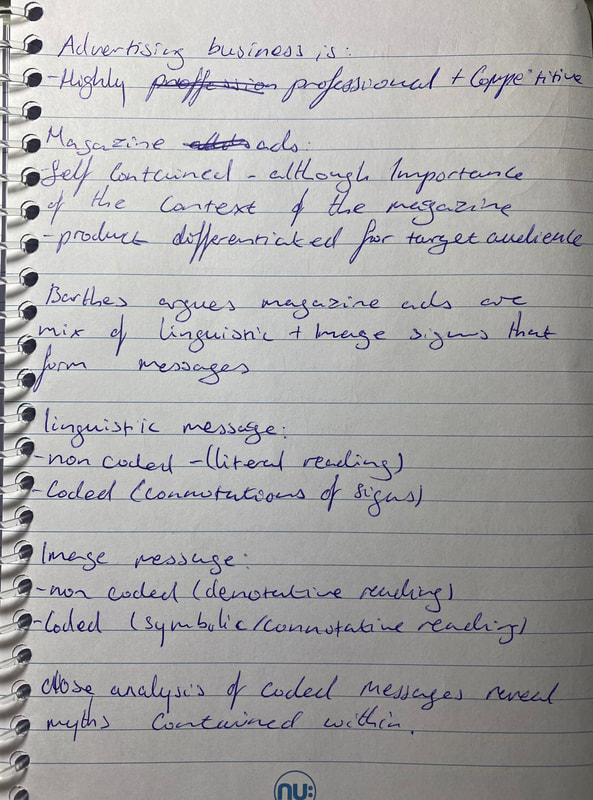
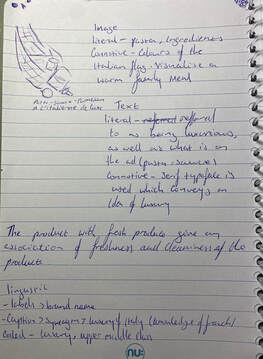
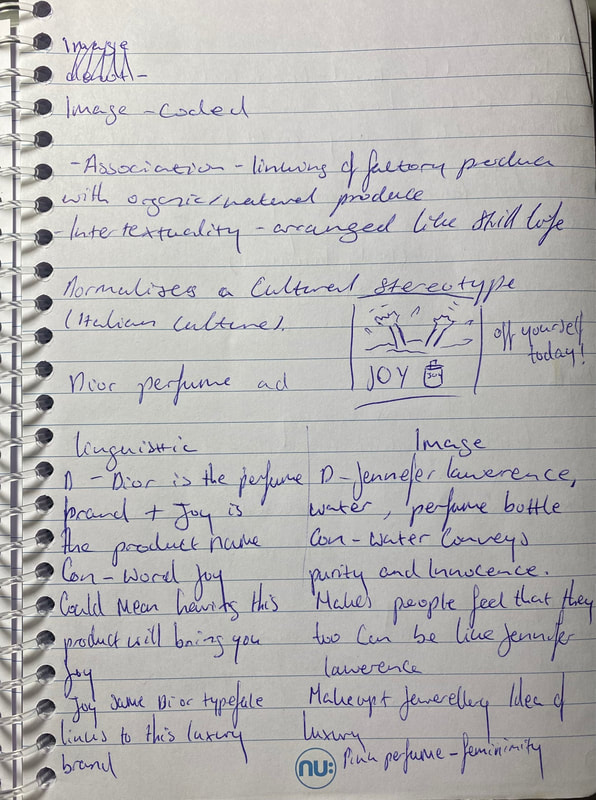
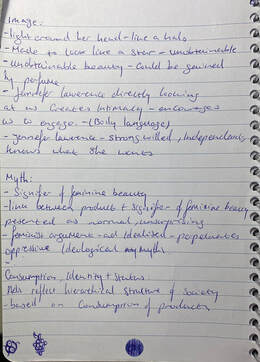
Blog Task - Semiotic analysis of a magazine ad
ReadingsScott Cloud Making Comics pp 128 - 138 Roland Barthes - The Photographic Message pp 15 - 27 Lecture notes
Presentation - Live event
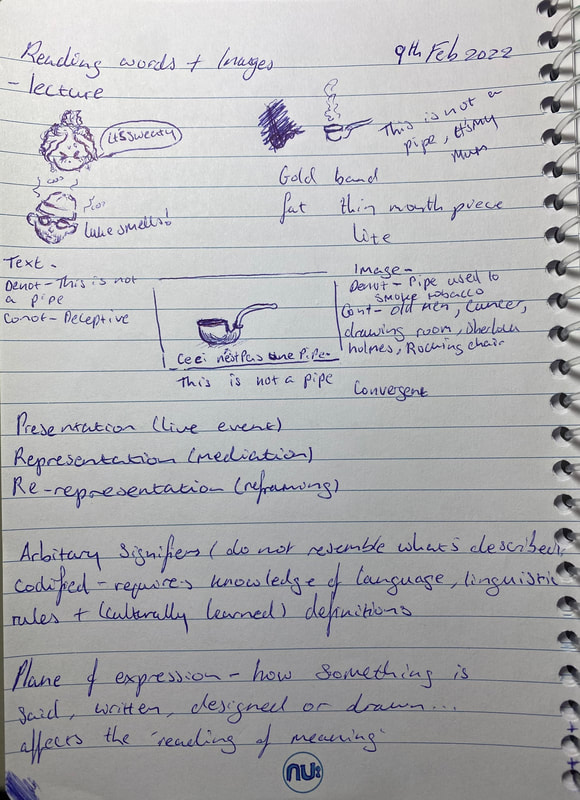
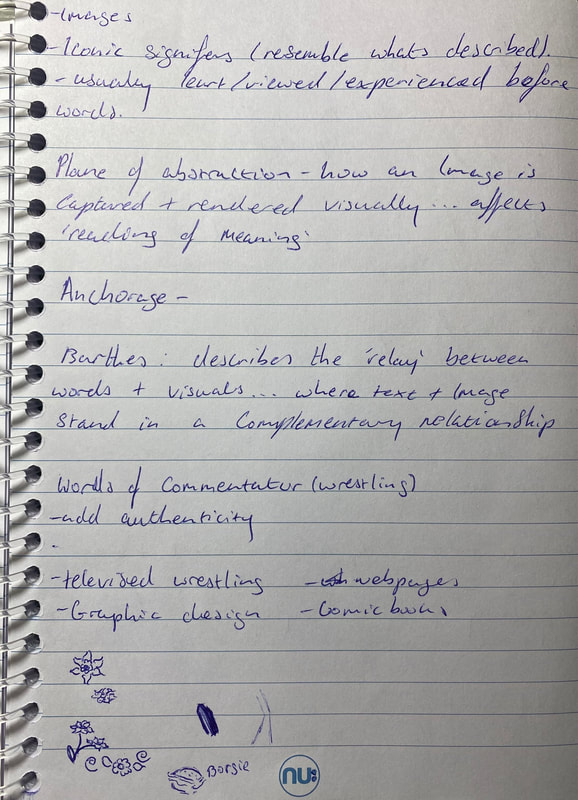
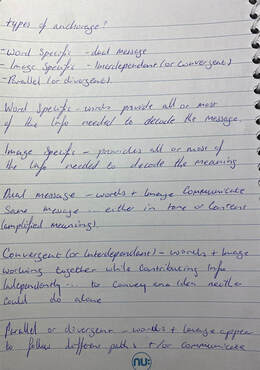
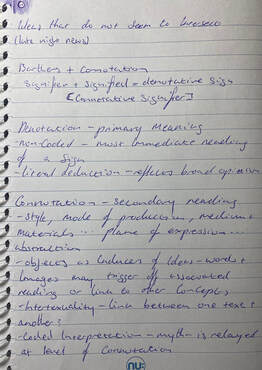
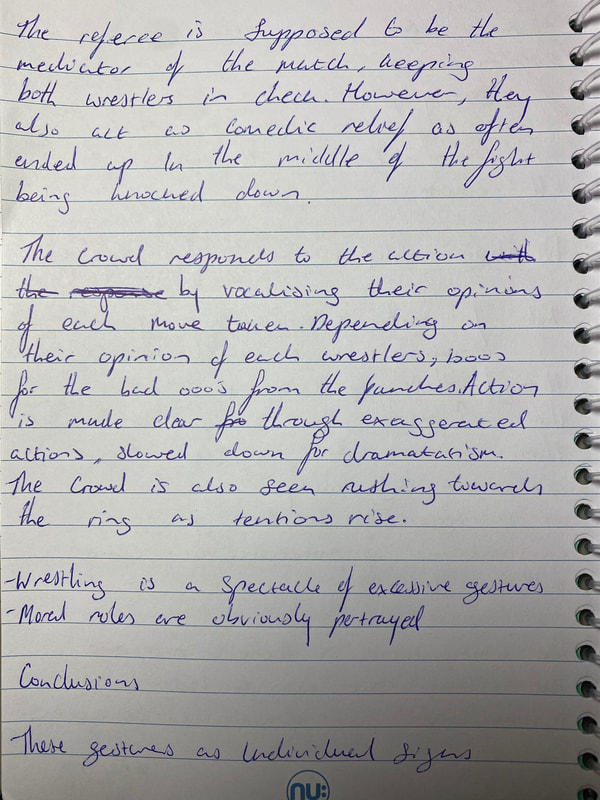
Representation - Mediation Re-representation - Reframing Arbitrary signifiers - Does not resemble what is described. Iconic signifiers - Resemble what is described. Plane of expression - How something is said or written that affects the reading of the meaning. Plane of abstraction - How and image is captured and rendered that affects the meaning that is picked up. Anchorage Word specific - The words provide all or most of the information needed to decode the message. Image specific - Provides most or all of the information needed for the meaning to be decoded. Dual message - Words and images communicate the same message. Convergent - Words and images work together, but contribute information independently. Without one or the other the idea wouldn't be fully conveyed. Parallel or divergent - Words and images communicate different ideas. Denotation - Primary meaning, non-coded Connotation - Secondary reading ReadingsJohnathan Bignall: Media Semiotics pp 5 - 17 Roland Barthes: The World of Wrestling from Mythologies pp 15 - 25 Lecture notes
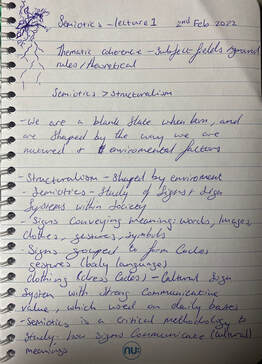
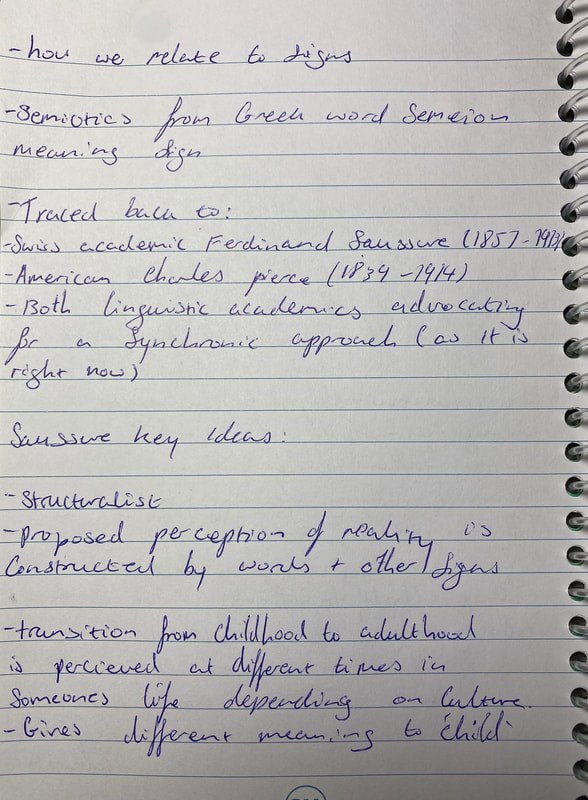
In this lecture I learnt that semiotics is the study of signs and signs systems. These signs refer to things convey meaning such as words, images, clothes, gestures, symbols, and the work done by illustrators. Understanding semiotics allows illustrators to understand how their work can have meaning and how they choose to produce their work can add extra layers of meaning if they take semiotics into account. The study of signs can be traced back to Ferdinand Saussure (1857-1913) and Charles pierce (1839-1914), both linguistic academics. Saussure was a structuralist who proposed that perception of reality is constructed by words and other signs. For example cultures and societies give a different meaning to the word 'child' depending on how their perception of what a child is and when someone transitions into adulthood. This means one persons reality will differ from another depending on what their definition for a child is. Previously, once an infant became a child and could work along side their parents, they were basically considered a smaller adult, however as society industrialised, laws protected children from the work place and instead were expected to go to school. The meaning of the word 'child' changed as now children were seen as a separate group from adults that needed protecting and educating, before being old enough to join the work force. Thematic coherence - Subject fields/ground rules/theoretical
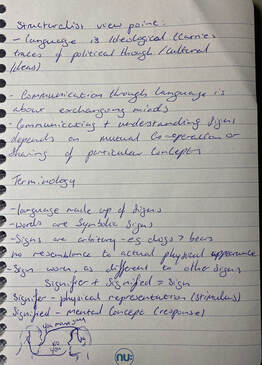
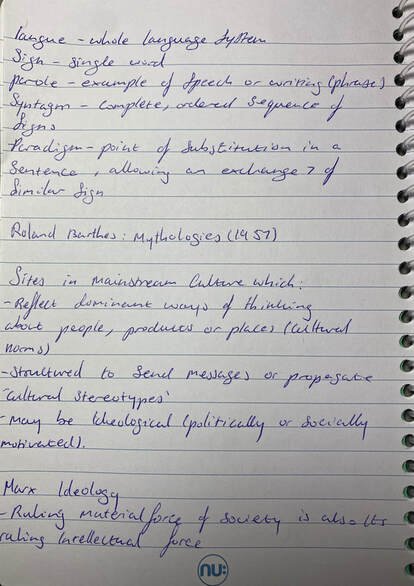
Structuralism - Human culture is shaped by the environment Semiotics - study of signs and sign systems within society Signifier - physical representation Signified - mental concept Langue - whole language system Sign - single word Parole - example of speech or writing Syntagm - complete, ordered sequence of signs Paradigm - point of substitution in a sentence, allowing an exchange of a similar sign |
AuthorWrite something about yourself. No need to be fancy, just an overview. ArchivesCategories |









 RSS Feed